Systems Integration Services for Growing Businesses
We connect the systems your team already relies on so information moves cleanly, reliably, and without manual handoffs, with API integration services built for real operations.
If your team is retyping data, chasing mismatches, or working around disconnected tools, integration becomes an operational fix, not just a technical project.
What this solves
Disconnected systems slow down operations, create reconciliation issues, and make it harder to trust the data people use to make decisions. Strong integrations reduce that friction and create a clearer operating picture.
What changes
Less manual copying between systems and fewer downstream data errors.
How we approach it
We design integrations with error handling and observability, not just happy-path data movement.
Why this matters
Disconnected systems slow down operations, create reconciliation issues, and make it harder to trust the data people use to make decisions. Strong integrations reduce that friction and create a clearer operating picture.
What Fintiq does
Practical delivery focused on how the process needs to work in real operations.
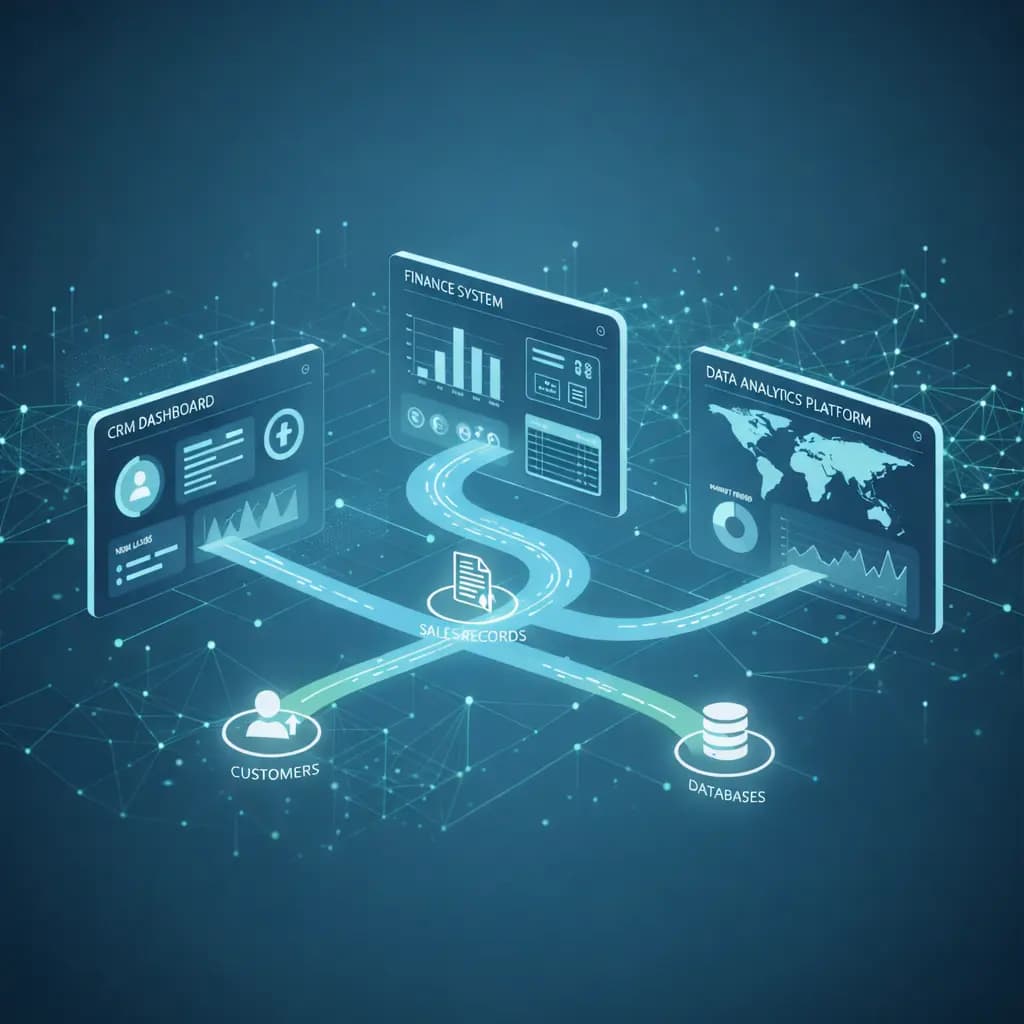
- Connect CRM, ERP, finance, operations, and customer systems around the workflows that matter most, including enterprise system integration requirements.
- Design real-time or scheduled data syncs with validation, logging, and recovery paths.
- Build integration layers that reduce brittle spreadsheet workarounds and manual reconciliation.
- Create operational visibility so teams can see what moved, what failed, and what needs attention.
What changes after implementation
- Less manual copying between systems and fewer downstream data errors.
- Faster operational handoffs between teams that depend on the same records.
- Clearer reporting because core business data stays aligned across platforms.
Common use cases
- Customer, order, or subscription data syncing across business systems.
- Finance and operations workflows that currently depend on spreadsheet exports.
- Operational platforms that need to pull data from multiple tools into one view.
Expected benefits
- More reliable operational data
- Reduced reconciliation effort
- Better visibility across connected systems
Why teams trust this approach
- We design integrations with error handling and observability, not just happy-path data movement.
- The goal is operational reliability, so we focus on the business process around the integration, not only the API connection itself.
- Where teams are already working around system gaps manually, we map that current-state process before replacing it.
Best fit
Businesses with growing operational complexity that need their core tools to work as one system instead of isolated silos.
See the kind of operational change this can support
These examples show how structured systems, automation, and clearer operational control translate into real-world delivery.
Centralized loan management for a microfinance lender
Shows how fragmented spreadsheet operations were replaced with one structured lending platform.
Unified hosting operations platform
Shows infrastructure, subscription, and billing data brought together into one operational system.
Discuss the right approach for your systems and workflows
If you are weighing options, cleaning up manual work, or planning a more reliable operating model, we can help you scope the right next step.