DevOps Automation Services for Business Reliability
We help teams release changes more safely, manage infrastructure more consistently, and improve visibility into production systems.
When releases feel risky or infrastructure is hard to reason about, the technical problem usually becomes an operational one too.
What this solves
Unstructured deployment and infrastructure processes create downtime risk, slow teams down, and make it harder to diagnose incidents quickly. Automation improves consistency and control.
What changes
More consistent releases with less manual intervention.
How we approach it
We focus on practical reliability improvements rather than adding process for its own sake.
Why this matters
Unstructured deployment and infrastructure processes create downtime risk, slow teams down, and make it harder to diagnose incidents quickly. Automation improves consistency and control.
What Fintiq does
Practical delivery focused on how the process needs to work in real operations.
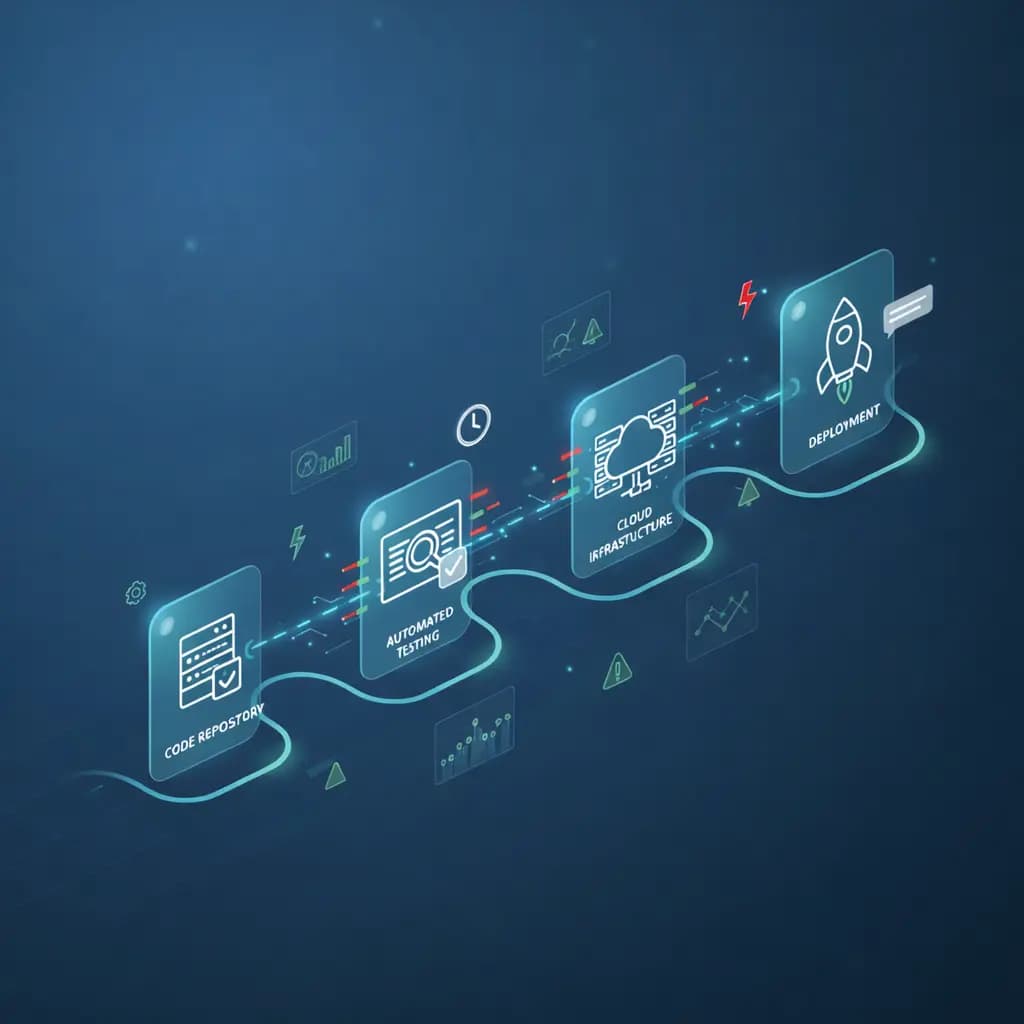
- Set up CI/CD pipelines that reduce release friction and improve repeatability.
- Automate testing, deployment, and environment provisioning where it meaningfully reduces risk.
- Introduce infrastructure-as-code practices for more consistent environments.
- Improve monitoring and alerting so teams can respond faster when systems drift or fail.
What changes after implementation
- More consistent releases with less manual intervention.
- Clearer production visibility and faster incident response.
- Infrastructure changes that are easier to track, repeat, and recover from.
Common use cases
- Teams moving away from manual deployments and environment drift.
- Operational environments that need stronger monitoring and clearer alerting.
- Growing engineering teams that need repeatable infrastructure and release workflows.
Expected benefits
- Faster release cycles
- Improved system stability
- Better operational visibility
Why teams trust this approach
- We focus on practical reliability improvements rather than adding process for its own sake.
- Monitoring, deployment, and infrastructure decisions are framed around operational risk and supportability.
- Where existing environments are already in use, we prioritize controlled improvement over disruptive replacement.
Best fit
Teams that need stronger release discipline, more stable environments, and a more dependable operational foundation.
See the kind of operational change this can support
These examples show how structured systems, automation, and clearer operational control translate into real-world delivery.
Unified hosting operations and monitoring
Shows how infrastructure visibility and operational control were brought together in one platform.
Discuss the right approach for your systems and workflows
If you are weighing options, cleaning up manual work, or planning a more reliable operating model, we can help you scope the right next step.